
-
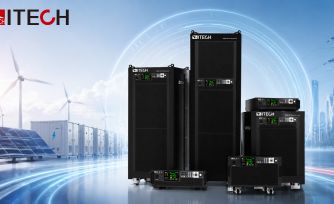
The Inflection Point in New Energy Battery Testing From BMS to Energy Storage PCS: Testing Challenges and Technology Trends
Read moreThe new energy battery industry is undergoing a profound transformation—from scale expansion to technology-driven upgrades. With solid-state battery pilot lines entering production in 2026, the global Battery Management System (BMS) market projected to exceed USD 14 billion, and Power Conversion Systems (PCS) for energy storage rapidly scaling alongside the development of next-generation power systems, these three trends are redefining the boundaries of battery testing. Against this backdrop, this article examines the evolving testing requirements and key challenges across the new energy battery industry, and explores the technological evolution of test equipment in three critical dimensions: power capability, channel density, and energy regeneration.
-
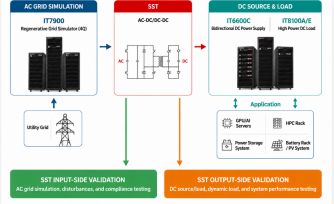
FROM AI COMPUTING TO 800V DC WHY SST VALIDATION MUST COME FIRST
Read moreAI is driving data centers toward higher power density and 800V DC architectures. Solid-State Transformers (SSTs) are becoming a key technology connecting medium-voltage grids, DC buses, energy storage systems, and high-density loads. The commercialization of SSTs depends not only on devices and topologies, but also on whether the entire system can be validated in a stable, repeatable, and reliable manner.
-
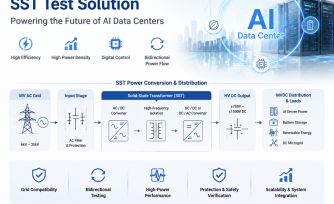
ITECH Solid-State Transformer (SST) Test Solution for AI Data Centers and MVDC Power Infrastructure
Read moreEnabling Reliable Validation of Next-Generation AI Power Systems with Advanced SST Testing Technologies
-
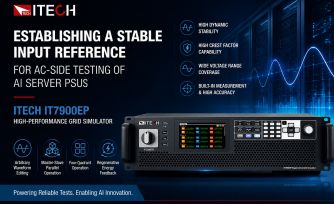
Establishing a Stable Input Reference for AC-Side Testing of AI Server PSUs: ITECH IT7900EP High-Performance Grid Simulator
Read moreIntroduction The power density of AI servers is increasing rapidly. Rack-level power consumption is evolving from tens of kilowatts in traditional servers to over 100 kW, and power architectures are transitioning from 48 V systems to 800 V HVDC. In this process, AC-side testing of AI server power supply units (PSUs) faces new requirements:
-
How to Meet the Low-Voltage, High-Current Dynamic Response Testing Requirements of AI Server DC-DC Converters — ITECH IT8100A/E High-Performance Electronic Load Solution
Read moreDriven by the exponential growth in AI computing demand, data centers and AI servers are undergoing a fundamental architectural transformation. As the core computing engine, GPUs have evolved from consuming several hundred watts to several kilowatts, with peak currents approaching 1,000 A per device. This trend is reshaping server thermal design and power distribution strategies while redefining the performance requirements of the Voltage Regulator Module (VRM) located adjacent to the GPU.
-
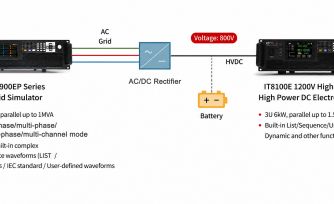
Breaking Through Power Shelf Testing for AI Server Power Supplies: Challenges of HVDC High-Voltage Architectures and ITECH Full-Stack Test Solutions
Read more1. Industry Shift: AI Compute Is Redefining the Power Shelf Generative AI applications are rapidly penetrating all industries, driving exponential growth in AI computing demand. As a result, data center power architectures are undergoing significant transformation. Rack-level power is increasing to the megawatt (MW) level, while DC output voltages are evolving from traditional 12V and 48V systems toward ±400V and even 800V high-voltage designs. At the same time, AI workloads introduce highly dynamic and frequent power fluctuations, creating major challenges for conventional power architectures.