
-
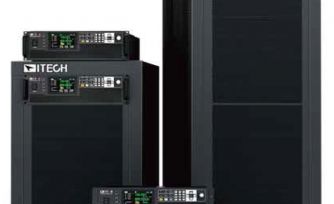
High-Performance Power Supply EDDP Power Cycling Test
Read moreEDDP refers to the total energy dissipated to produce a measurable and specific degradation indicator in the Device Under Test (DUT) during power cycling. It is an accelerated aging test method designed to evaluate the lifetime and reliability of power semiconductor modules under real operating conditions—such as frequent switching and load fluctuations.
-
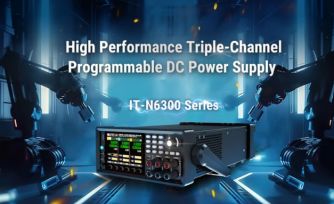
IT-N6300 Series: Bipolar Innovation, Redefining Negative Voltage Power Supply
Read moreIn cutting-edge applications such as new energy, semiconductors, automotive electronics, and lasers, testing requirements are becoming increasingly complex. Traditional positive voltage power supply solutions can no longer meet the demands of chip bias testing, electrochemical deposition processes, operational amplifier power supply, and other applications requiring negative voltage and seamless positive-negative voltage switching. ITECH IT-N6300 Series triple-channel programmable DC power supply revolutionizes negative voltage power solutions with its built-in bipolar output mode. Without additional wiring, it enables efficient and stable negative voltage supply, significantly enhancing testing convenience, stability, and precision.
-
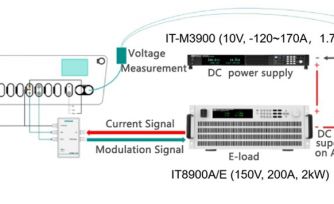
High Power/High Current Fuel Cell EIS Test Challenges and Solutions
Read more1. Background: International Trends in Fuel Cell Testing With the global focus on sustainable energy, fuel cell technology is being increasingly applied in transportation, stationary power systems, and portable devices. To ensure the performance and longevity of fuel cells, precise testing and diagnostic methods have become critically important. Internationally, research institutions and enterprises are dedicating resources to the development of advanced testing platforms that address various performance evaluation needs—from laboratory research to high-power application scenarios.
-
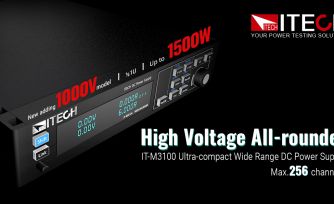
High Voltage All-rounder - IT-M3100 Series Compact Programmable DC Power Supply
Read moreITECH's popular IT-M3100 programmable DC power supply series has added a new star with the launch of a new 1000V high-voltage model. This new member not only covers power ranging from 400W to 1500W, but also is known for its compact design, 1U height and half-width rack, which is perfectly suitable for laboratory and production line system control. Not only that, the IT-M3100 series also supports synchronous control of up to 256 channels, which greatly improves the efficiency of production line testing, and is a flexible and efficient testing tool.
-
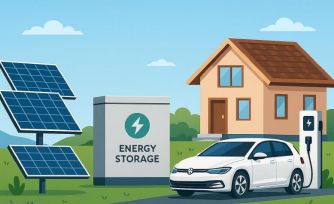
Smart Testing for PV + Storage + EV Charging with IT6600C
Read moreWhat Is "PV + Storage + Charging" (PSC)? As carbon neutrality and peak carbon emission goals are gradually being implemented, the energy storage market is witnessing explosive trillion-level growth. Amid the imbalance between the rapid development of electric vehicles and charging infrastructure, the integration of solar power generation, battery energy storage and EV charging—referred to as “PV + Storage + Charging” (PSC)—is emerging as an innovative solution for building greener, safer, and more efficient EV charging stations.
-
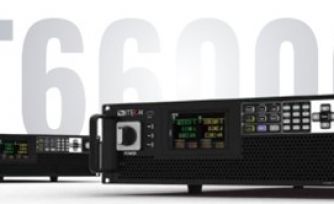
Application of the IT6600C Dual-Channel DC Source/Load in Back-to-Back Converter
Read moreIn modern industrial testing, energy recovery, and power electronics, Back-to-Back Motor technology has become an important approach for efficient testing and energy-saving applications. Compared to traditional mechanical load testing methods, back-to-back motor systems enable more precise and energy-efficient testing and control through closed-loop energy flow between a motor and a generator. This technology is widely used in motor testing, inverter validation, electric vehicle (EV) powertrain evaluation, renewable energy applications, as well as in high-end manufacturing industries such as aerospace.