|
Accurate Battery Cluster Simulation for Energy Storage Converter Testing
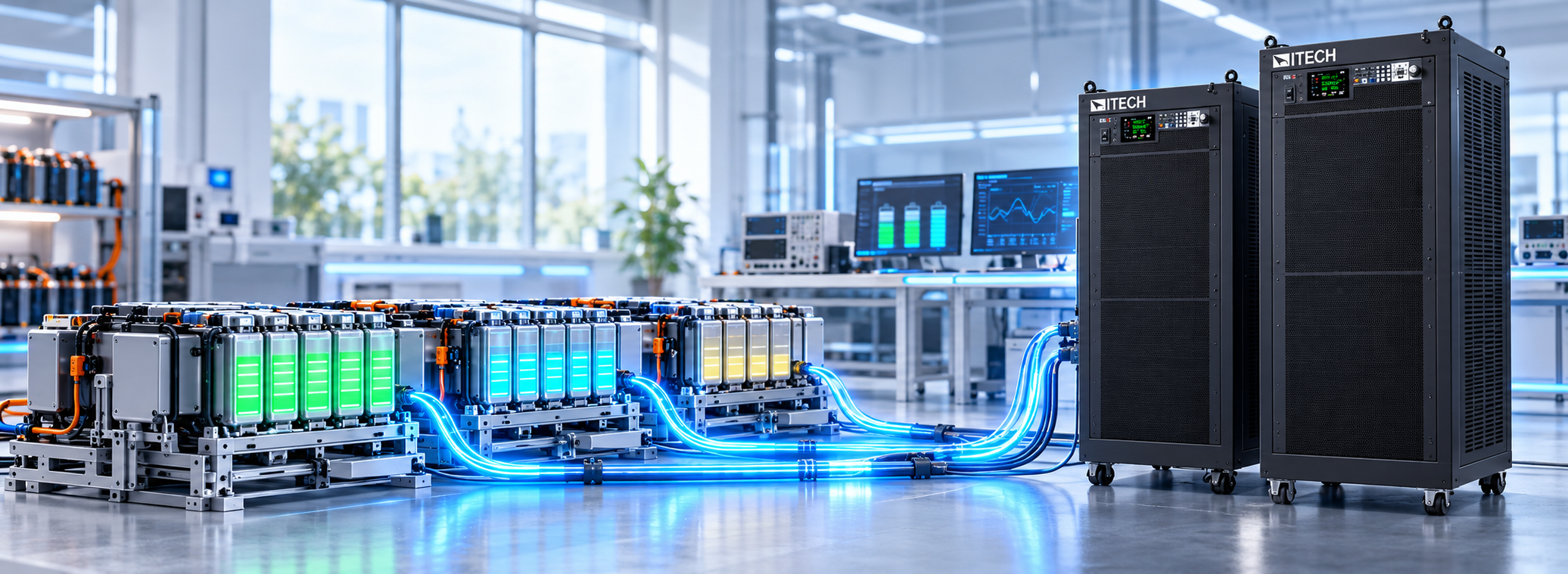
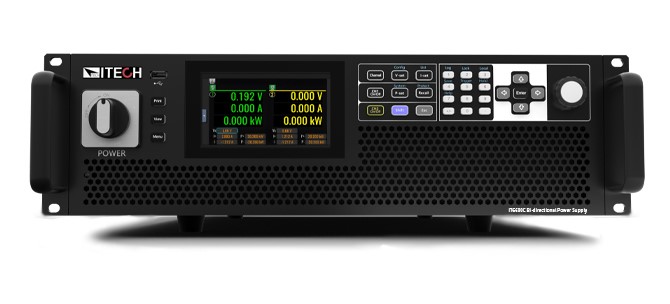
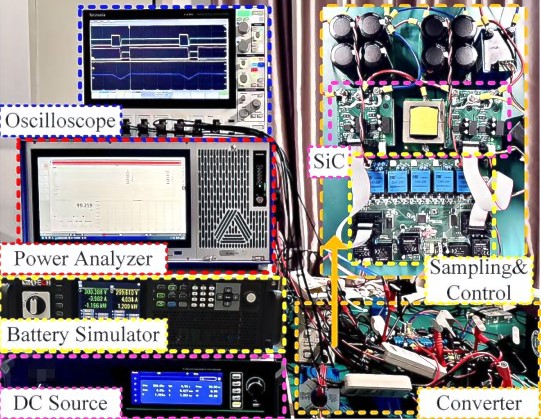
A research team from the Department of Electrical Engineering at a university has published findings on battery cluster equalization in the IEEE Journal of Emerging and Selected Topics in Power Electronics. The team used the ITECH IT6642C battery simulator during experimental validation of a novel inter-battery-cluster equalization power converter (IBECPC), providing a controlled platform for evaluating converter performance.
Simulating Battery Cluster Characteristics for Equalization Testing
In large-scale battery energy storage systems (BESS), state-of-charge (SOC) imbalance among battery clusters can reduce available system capacity, accelerate battery aging, and increase the risk of circulating currents. Accurately reproducing the terminal voltage–current characteristics of battery clusters at different SOC levels is a key challenge in evaluating the dynamic performance of equalization converters.
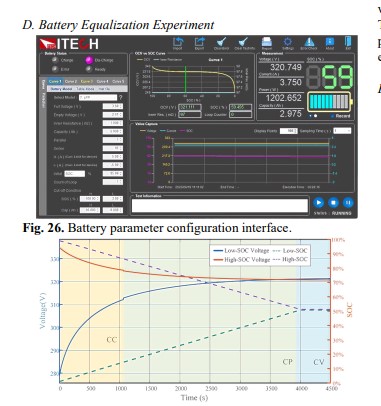
Test setups that do not adequately reproduce battery cluster characteristics across a wide SOC range may yield results that differ from those observed under real operating conditions.
The research team used the IT6642C to build a high-precision battery cluster simulation platform. With accurate voltage and current output and low ripple, the instrument reproduces the voltage variations of high-SOC and low-SOC battery clusters during equalization. This setup enables researchers to evaluate the zero-voltage-switching (ZVS) performance of the IBECPC across its operating range under controlled laboratory conditions, supporting repeatable testing and helping streamline experimental validation.
Supporting Control Algorithm Development and Mode Switching Tests
The programmable battery-simulation function of the IT6642C supports flexible configuration of experimental conditions. Via the built-in SOC-voltage curve configuration interface, researchers can rapidly set battery-cluster characteristics corresponding to different initial SOC values. Combined with Battery Management System (BMS) analog signals, the smooth-switching capability of the equalization system across Constant-Current (CC), Constant-Power (CP), and Constant-Voltage (CV) modes can be verified within a single test.
This flexible test setup supports iterative optimization of the sensorless ZVS control strategy and the CC–CP–CV smooth-switching algorithm proposed by the team. The team’s 1,200 W prototype achieved a reported peak efficiency of 99.361%, with soft-switching operation maintained across the tested operating conditions.
Stable Output for Extended Equalization Experiments
Battery equalization experiments require sustained, stable operation. The IT6642C provides stable output with low drift, supporting continuous tests lasting thousands of seconds. Stable output helps reduce the influence of supply drift on ZVS evaluation and efficiency measurements, supporting consistent measurements throughout extended equalization tests.
Supporting Energy Storage Research and Product Development
This application demonstrates how the IT6642C can support battery cluster simulation and energy storage equalization research. Its output accuracy, stability, and ease of use support both controlled experimental testing and extended operation.
The IT6642C has been used in more than 20 R&D application scenarios, including testing energy storage converters, battery management systems, and EV charging systems, supporting work from laboratory research through product development.
ITECH Electronics provides high-precision test solutions to support innovation in batteries and energy storage. To learn more about the IT6642C and ITECH’s battery simulation solutions, visit our website or contact the ITECH team to discuss your testing requirements.
|