The Inflection Point in New Energy Battery Testing From BMS to Energy Storage PCS: Testing Challenges and Technology Trends
The new energy battery industry is undergoing a profound transformation—from scale expansion to technology-driven upgrades. With solid-state battery pilot lines entering production in 2026, the global Battery Management System (BMS) market projected to exceed USD 14 billion, and Power Conversion Systems (PCS) for energy storage rapidly scaling alongside the development of next-generation power systems, these three trends are redefining the boundaries of battery testing. Against this backdrop, this article examines the evolving testing requirements and key challenges across the new energy battery industry, and explores the technological evolution of test equipment in three critical dimensions: power capability, channel density, and energy regeneration.
1. Industry Inflection Point: Three Trends Driving the Evolution of Testing
1.1 Solid-State Batteries Enter the Pilot-Scale Validation Stage
2026 is widely regarded as a critical year in the commercialization of all-solid-state batteries. Pilot production lines for sulfide-based all-solid-state batteries have entered operation, while large-scale manufacturing projects are also progressing. Major Japanese and Korean manufacturers, including Toyota, Nissan, and Samsung SDI, are advancing pilot-scale validation.
The industry's focus is gradually shifting from “producing samples” to “improving yield and product quality.” As a result, testing is moving upstream from R&D validation into production-line quality control. Testing requirements for cell consistency screening, interfacial impedance characterization, and accelerated cycle-life evaluation are expected to increase significantly.
More importantly, the higher voltage characteristics of solid-state batteries—with individual cells potentially exceeding 5 V—together with the complex behavior of emerging electrolyte interfaces, place greater demands on the voltage range, measurement accuracy, and overall performance of test equipment.
1.2 A Growing BMS Market Is Expanding Testing Requirements
According to industry research forecasts, the global BMS market is projected to reach approximately USD 14.01 billion in 2026 and grow to USD 25.08 billion by 2035. Automotive batteries account for approximately 54% of downstream BMS applications, followed by consumer batteries at 22%, while energy storage and other applications account for 24%.
At the same time, BMS testing is expanding beyond conventional electric vehicles into emerging applications such as UAVs, humanoid robots, and energy storage systems.
Humanoid robots, for example, require battery systems to deliver high power output and long operating time within highly constrained physical spaces. Their BMS must therefore handle increasingly complex operating conditions while providing more stringent safety and protection functions.
This evolution creates a compound requirement for battery simulators: high channel density, high accuracy, and fast dynamic response.
1.3 Rapid Growth in Energy Storage PCS Makes Bidirectional Testing Essential
As next-generation power systems continue to develop, Power Conversion Systems (PCS) are becoming increasingly important as the interface between battery systems and the electrical grid.
A PCS is essentially a bidirectional AC/DC power converter. During charging, it converts AC power into DC power to charge the battery. During discharging, it converts DC power from the battery into AC power and feeds it back to the grid.
This bidirectional operating characteristic means PCS testing must cover both rectification and inversion modes, including efficiency, power quality, and dynamic response testing. The test system must therefore provide bidirectional source-and-load capabilities.
As energy storage projects scale from hundreds of kilowatts to the megawatt level and beyond, the power requirements of PCS test systems are increasing rapidly.
2. Three Major Shifts in Battery Testing
2.1 From “Charge/Discharge Cycling” to “Operating-Condition Simulation”
Traditional battery testing primarily relies on constant-current charge/discharge cycling, with a focus on capacity degradation and cycle life.
As application scenarios become increasingly complex, however, operating-condition simulation is becoming a more important testing requirement.
For example:
- Automotive batteries need to reproduce pulsed charge/discharge profiles under driving cycles such as NEDC and WLTC.
- Energy storage batteries need to simulate power steps associated with grid frequency regulation.
- Consumer batteries need to reproduce alternating standby and peak-load conditions.
Test equipment must therefore do more than provide stable DC power. It must deliver fast dynamic response and programmable output profiles to accurately reproduce complex operating conditions.
The dynamic response of the test equipment directly determines how realistically the target operating conditions can be reproduced.
2.2 From Cell-Level Testing to System-Level Validation
A complete battery testing chain typically covers four levels:
Cell → Module → Battery Pack → System
Cell-level testing focuses on parameter consistency and fundamental performance. Module-level testing evaluates series/parallel configuration, current sharing, and thermal management. Battery-pack testing focuses on BMS control strategies and protection logic, while system-level testing examines coordinated operation with inverters, motors, and other power electronics.
As testing moves toward higher system levels, power requirements can increase from milliwatt-level applications to hundreds of kilowatts or even megawatts. Voltage levels can likewise expand from below 5 V at the cell level to 800 V or even 1500 V in large-scale energy storage systems.
The challenge for test equipment manufacturers is therefore to provide a unified testing platform spanning multiple power levels and voltage ranges, minimizing the need for users to switch between different test systems while maintaining test-data consistency and traceability across development stages.
2.3 From Energy-Consuming Testing to Energy-Regenerative Testing
At the battery-pack and system levels, charge/discharge cycling can consume a substantial amount of electrical energy.
For example, a 100 kWh battery pack undergoing a complete charge/discharge cycle may process more than 200 kWh of electrical energy. If ten cycles are performed per day, the daily energy consumption associated with a single battery pack can exceed 2,000 kWh.
In large-scale production testing, where dozens of battery packs may be tested simultaneously, energy consumption becomes even more significant.
Traditional dissipative loads convert discharged energy into heat, resulting not only in energy waste but also in substantial cooling requirements and operating costs.
Energy-regenerative testing, by contrast, can return discharged energy to the grid, significantly improving overall energy efficiency. As a result, regenerative test systems are becoming an increasingly important solution for industrial-scale battery testing.
3. Key Testing Challenges
3.1 High-Power Battery-Pack Testing: The Dual Challenge of Power and Regeneration
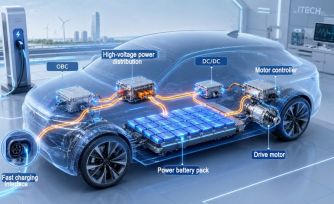
Battery-pack testing requires test equipment to function both as a power source for charging and as a load for absorbing battery discharge energy.
For an 800 V high-voltage battery platform, the operating voltage may reach 600–800 V. Battery packs with capacities of 100 kWh or more can require tens to hundreds of kilowatts during charge/discharge testing.
More importantly, charging and discharging may occur in frequent succession. A single test system must therefore perform both source and load functions, with seamless transitions and without undesirable interruptions or transient spikes.
This places stringent requirements on:
- Bidirectional power capability
- Fast source/load transitions
- Dynamic response
- Protection and safety functions
- Energy regeneration efficiency
During discharge, the energy released by the battery must be efficiently absorbed or regenerated. Otherwise, significant heat dissipation and operating costs can result.
3.2 BMS Testing: Accuracy and Efficiency in Multi-Channel Battery Simulation
The core of BMS testing is battery simulation—using electronic equipment to emulate real battery cells and provide the BMS with controllable voltage, internal resistance, and other electrical characteristics.
A typical BMS may monitor 12–24 individual cells, requiring an equivalent number of channels for simultaneous simulation.
More advanced BMS validation also requires the simulation of abnormal conditions such as overvoltage, undervoltage, and overcurrent to verify whether the BMS protection mechanisms respond accurately and within the required time.
Battery simulators must therefore provide a combination of:
- Independent multi-channel control
- High-accuracy voltage output
- Internal resistance simulation
- Fault injection
- Fast dynamic response
- Parallel testing capabilities
As production-line testing becomes increasingly focused on throughput and efficiency, the ability to perform high-density, parallel multi-channel testing is becoming a critical performance metric.
3.3 Energy Storage PCS Testing: The Challenge of Integrated Source-and-Load Testing
PCS testing requires both source and load capabilities on the AC and DC sides.
On the AC side, a programmable AC source must simulate grid voltage and frequency variations. On the DC side, a bidirectional DC source must emulate battery charging and discharging conditions.
PCS testing must evaluate both rectification and inversion efficiency, while also validating power-quality parameters such as harmonics and power factor under a wide range of operating conditions.
As PCS power levels increase from hundreds of kilowatts to the megawatt range, the cost and energy consumption associated with high-power test systems become increasingly significant.
Energy regeneration is therefore becoming a key factor in the economic viability of high-power PCS testing.
4. ITECH's Capabilities in New Energy Battery Testing
In response to the evolving requirements of the new energy battery industry, ITECH leverages more than a decade of experience in power electronics testing to build a comprehensive testing portfolio covering the entire battery development chain—from cell and module testing to battery-pack and system-level validation.
4.1 High-Power Bidirectional DC Power Supply: IT6600C Series
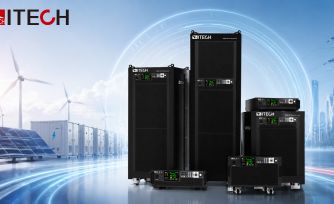
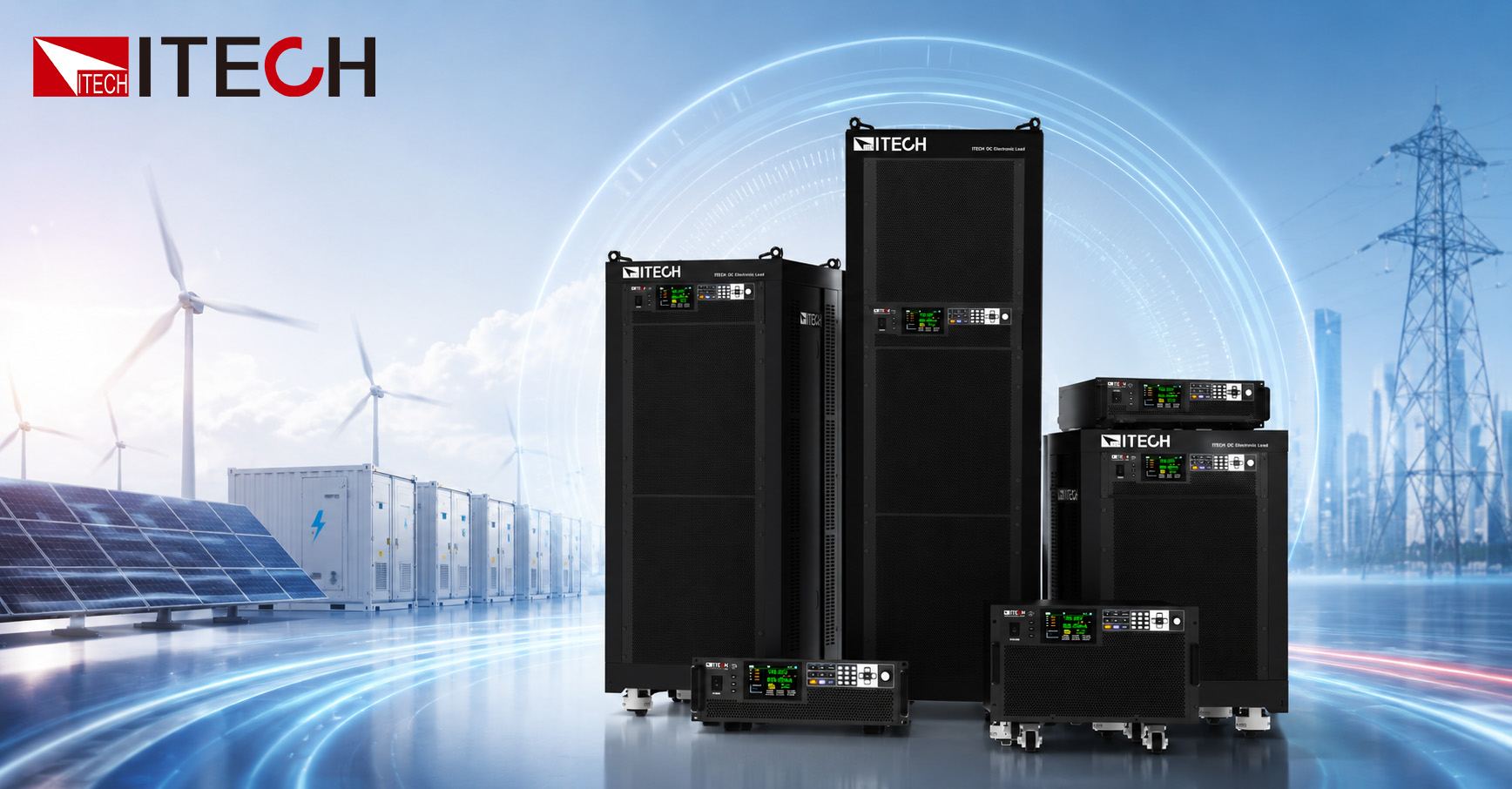
The ITECH IT6600C Series bidirectional DC power supply provides a wide output range, with voltage ratings up to 2250 V and power capabilities up to 20 MW.
For MW-level battery-pack charge/discharge testing, multiple units can be configured in master-slave parallel operation to support high-capacity battery packs and energy storage systems.
With bidirectional power-flow capability, the IT6600C Series operates as a power source during charging and as an energy-absorbing load during battery discharge, with the discharged energy regenerated back to the grid.
This source-and-load integration eliminates the need to switch between separate charging and discharging equipment, improving test efficiency while significantly reducing energy consumption and operating costs.
For 800 V high-voltage battery platforms, the IT6600C Series provides the voltage capability required for 800 V-class testing and can be configured for higher-voltage test requirements. Its high-accuracy voltage and current measurement capabilities also support charge/discharge efficiency calculations and battery capacity evaluation.
4.2 High-Performance DC Electronic Load: IT8100A/E Series
The ITECH IT8100A/E Series is a high-power DC electronic load designed for demanding dynamic-load applications.
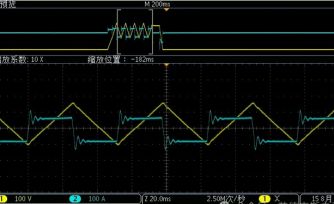
With a maximum dynamic current slew rate of 150 A/μs and support for 10 operating modes, the series provides high-speed and flexible load simulation for battery and power electronics testing.
In battery discharge testing, its battery test mode supports controlled testing and safe shutdown functions. For battery-pack operating-condition simulation, the IT8100A/E Series can be programmed to reproduce dynamic current profiles, including driving-cycle conditions and V2L/V2G operating scenarios, enabling engineers to evaluate battery response under complex load conditions.
For BMS protection validation, its fast current transient capability can be used to simulate overcurrent conditions and evaluate the response speed and effectiveness of BMS protection mechanisms.
Multiple IT8100A/E units can be connected in parallel to support high-power and MW-level discharge testing. Combined with the IT6600C Series, they can form a comprehensive charge/discharge testing platform.
4.3 System-Level Test Solution Integration
ITECH provides more than individual test instruments—it also delivers integrated system-level testing solutions.
Across the new energy battery testing chain, ITECH can provide solutions ranging from cell-level parameter characterization and battery-pack charge/discharge cycling to BMS functional validation and energy storage PCS testing.
The parallel operation capabilities of the IT6600C and IT8100A/E Series, combined with unified remote-control interfaces and data acquisition capabilities, enable engineers to build automated testing systems with high channel density, high power, and large-scale data acquisition.
ITECH also brings extensive experience in regenerative testing technologies, including grid-connected power-quality control, multi-unit current sharing, and coordinated protection. These capabilities provide a reliable foundation for the safe and stable operation of MW-level testing platforms.
5. Outlook: Toward Full-Lifecycle Battery Validation
New energy battery testing is evolving from “pass/fail verification” toward “full-lifecycle validation.”
The commercialization of solid-state batteries is creating new requirements for advanced-material validation. The expansion of BMS applications into emerging fields such as humanoid robots is driving demand for high-accuracy, multi-channel battery simulation. Meanwhile, the increasing power levels of energy storage PCS are accelerating the adoption of MW-class bidirectional testing systems.
Together, these trends point toward a clear direction for the next generation of test equipment:
Higher power, higher accuracy, greater channel density, and more efficient energy regeneration.
With the IT6600C Series high-power bidirectional DC power supply and IT8100A/E Series regenerative DC electronic load at the core of its portfolio, ITECH will continue to strengthen its end-to-end battery testing capabilities, covering applications from cell-level characterization to system-level validation.
As a high-end test and measurement brand with deep expertise in power electronics testing, ITECH focuses on high-precision electronic loads and bidirectional DC power supplies, delivering comprehensive testing solutions across AI data centers, new energy vehicles, photovoltaic and energy storage systems, and other high-power applications.
With continuous innovation and full-stack test solutions, ITECH is committed to providing customers in more than 80 countries and regions worldwide with accurate, reliable, and efficient testing capabilities throughout R&D and production—helping the new energy industry accelerate its transition toward higher performance, greater efficiency, and smarter testing.