How is PCS Fault Ride-Through (FRT) Tested?
Fault Ride-Through (FRT) testing of an energy storage Power Conversion System (PCS) is a strict compliance test. It is mainly used to verify whether the PCS can remain continuously connected to the grid without tripping when voltage sags or swells occur, and whether it can provide the necessary reactive power support to the grid as required.
So, how should PCS Fault Ride-Through testing be conducted?
Before starting the test, it is essential to clarify the applicable standards. In China, the following national standards are mainly used:
-
Test Procedures for
Grid Connection of Electrochemical Energy Storage Stations (GB/T 36548-2024):
Specifies grid performance testing methods, including fault ride-through. -
Technical Specification
for Testing of Energy Storage Converters (GB/T
34133-2023):
A standard specifically focused on PCS testing.
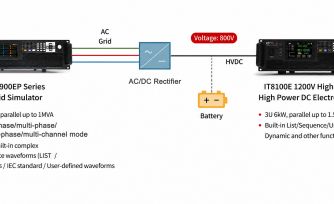
Next, a test platform needs to be established. Taking a typical electrochemical energy storage system architecture as an example, during PCS testing:
- The DC side is powered by a battery simulator (BSS2000 + IT6000C)
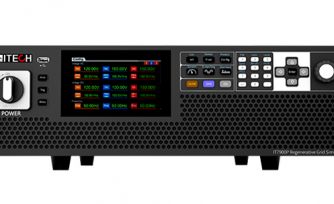
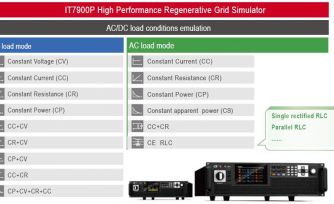
- The AC side is connected to a grid simulator (IT7900 / IT7900P)
Next comes the specific testing procedure:
1)
Set Test Conditions:
According to the standard requirements, configure different types of voltage
fault scenarios. Taking Low Voltage Ride-Through (LVRT) as an example, the key
parameters include:
-
Fault type:
Three-phase short circuit (symmetrical) or single-/two-phase short circuit (asymmetrical) -
Voltage sag depth:
Typically tested at 20%, 50%, and 80% of the rated voltage -
Duration:
Such as 150 ms, 625 ms, or up to 3 seconds -
Test point:
Usually conducted at the rated power operating point of the PCS
3)
Data Analysis and Evaluation:
After the test is completed, the collected data must be analyzed and compared
against the standards to determine compliance. The key evaluation criteria
include:
-
Continuous operation
capability:
Whether the PCS remains connected to the grid throughout the fault and recovery process without tripping -
Reactive power support
capability:
Whether the PCS can quickly inject the required reactive current, based on the voltage sag depth, to support grid voltage recovery during the fault -
Active power recovery
performance:
Whether the PCS can smoothly and rapidly restore its active power output to the reference value after the fault is cleared
In summary, PCS fault ride-through testing is a standards-driven process that requires a complex and highly precise test setup. The core lies in using a grid simulator to safely and repeatably reproduce various grid fault conditions in a laboratory environment, thereby comprehensively validating the PCS’s fault tolerance and grid-support capabilities.
Therefore, selecting a high-performance grid simulator is key to improving testing efficiency. The ITECH IT7900/IT7900E series grid simulators, with their powerful arbitrary waveform generation capabilities, can simulate a wide range of grid disturbance waveforms, making them an ideal choice for both testing and R&D laboratories.