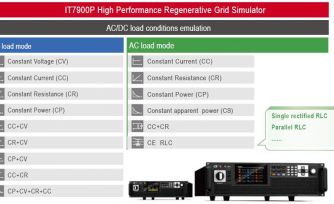
Grid Simulator Test Applications and IT7900P/EP Technical Practice
1. Basic Principles and Testing System of Grid Simulators A grid simulator is essentially a programmable AC power source capable of accurately reproducing various real grid operating conditions. It can also simulate abnormal or extreme grid states. Its core value lies in providing the device under test (DUT) with a controllable, repeatable, and safe test environment, enabling comprehensive evaluation of the DUT’s grid compatibility under laboratory conditions.
Basic Functional Architecture of Grid Simulation
A typical grid simulator consists of three main parts: a power stage unit, a control unit, and a measurement unit.
- Power stage unit: Uses advanced power electronic conversion technology to achieve precise conversion and control of electrical energy forms.
- Control unit: Based on high-speed digital processors, it executes waveform generation, closed-loop regulation, and protection logic.
- Measurement unit: Performs high-precision sampling and analysis of output voltage and current.
These three parts work together to achieve independent or combined regulation of multiple parameters, including amplitude, frequency, phase, waveform, and impedance.
Classification Dimensions of Testing Systems
The testing applications of grid simulators can be categorized along the following dimensions:
- By test nature: including type tests, R&D testing, production line testing, and certification testing
- By grid condition: covering normal operating condition tests, abnormal condition tests, and fault ride-through tests
- By DUT type: applicable to photovoltaic inverters, energy storage converters, electric vehicle chargers, UPS systems, and aviation ground power supplies
- By standard system: required to comply with IEC, IEEE, EN, GB, and other international, national, and industry standards
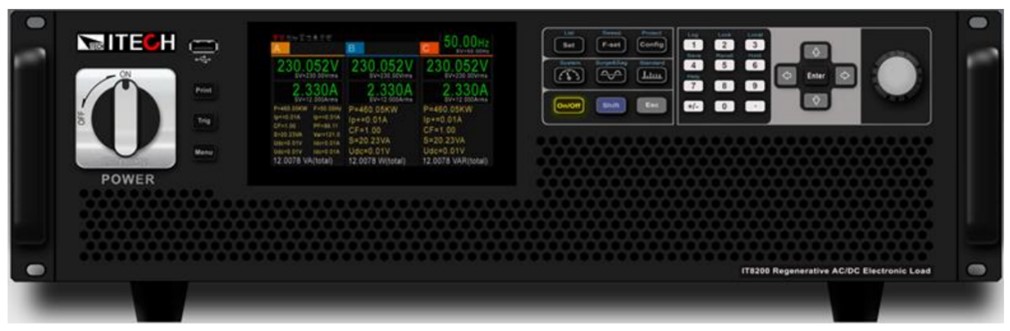
2. Technical Features and Implementation Mechanism of the IT7900P Grid Simulator
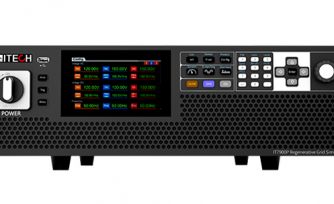
The IT7900P series is a high-performance grid simulator developed by ITECH. It adopts a three-level inverter topology based on silicon carbide (SiC) devices, offering significant advantages in output capability, waveform quality, and dynamic response.
Core Hardware Architecture
The series features fully digital control and a high-power-density design, supporting parallel expansion up to 2 MVA. Its key characteristics include:
- Wide output range: Voltage from 0–350 V L-N, with DC offset injection capability
- High-performance waveform generation: Built-in arbitrary waveform generator supporting synthesis of up to 50th-order harmonics
- Bidirectional energy flow: Integrated regenerative load capability, significantly reducing energy consumption and thermal stress during testing
- Low output impedance: Enables simulation of weak grid conditions, with adjustable output impedance functionality
Software and Control Features
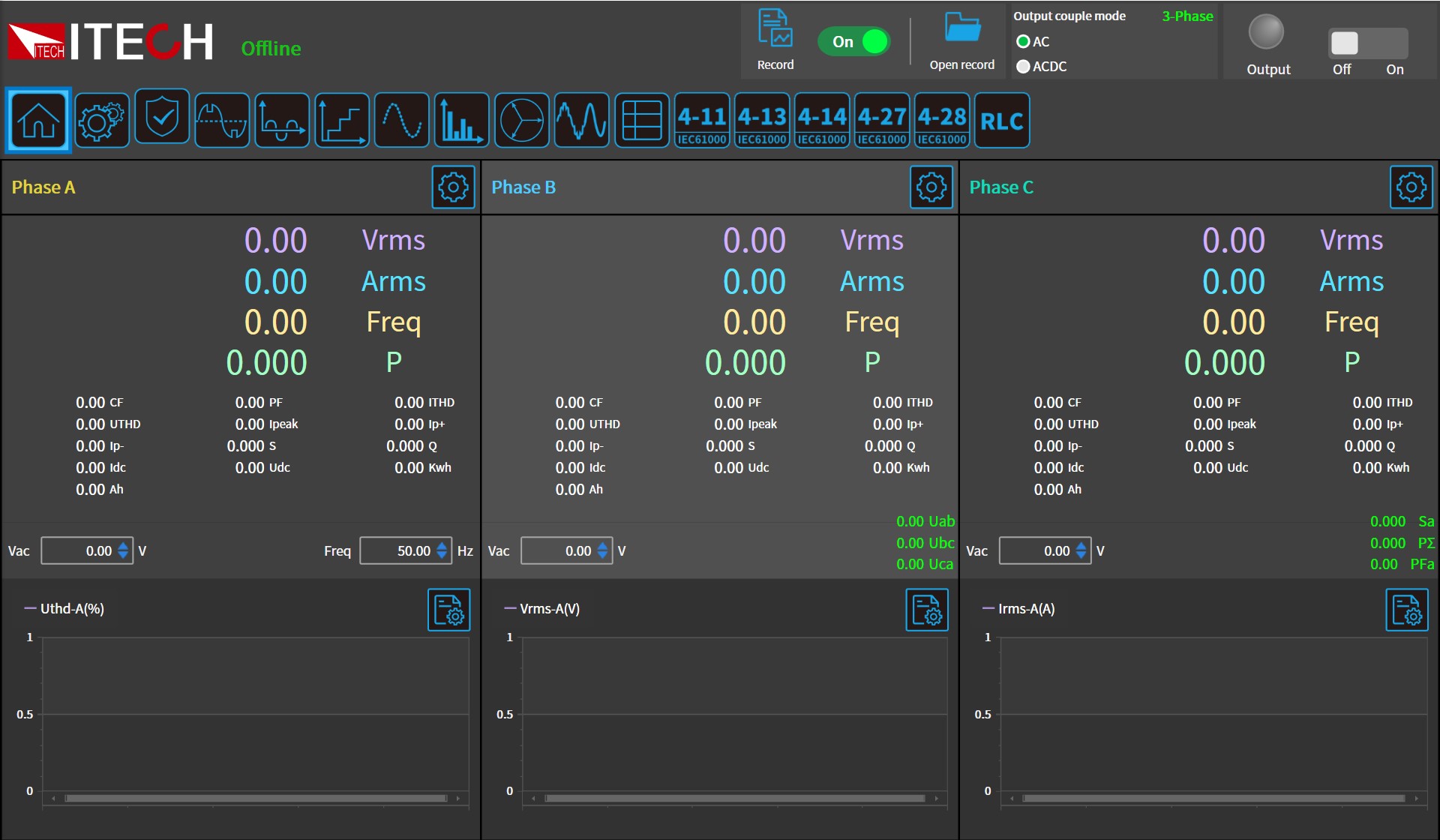
The IT7900P/EP is equipped with a graphical user interface and rich programming interfaces (LAN, GPIB, USB, CAN, etc.). Its software system provides:
- Preloaded standard waveform library: Includes typical grid disturbance waveforms defined in standards such as IEC 61000-4-13/14/28/34
- Sequence editing function: Allows editing and automatic execution of complex timing events, enabling simulation of gradual changes, sudden transients, and repetitive pulses in grid conditions
- Real-time monitoring and data logging: Continuously records and analyzes parameters such as voltage, current, power, harmonics, and flicker
3. In-Depth Analysis of Typical Test Applications Based on the IT7900P
Conventional Electrical Performance and Steady-State Testing
This category verifies the basic performance of equipment under ideal or standard grid conditions.
Input characteristic testing:
Includes operating voltage/frequency range, input current harmonics (IEC
61000-3-2/12), power factor, and efficiency measurements. The IT7900P/EP can
precisely set boundary conditions and directly measure harmonic content and THD
using its high-precision analysis module.
Output performance validation:
For inverter-based devices, this includes output voltage accuracy,
voltage/frequency regulation stability, and load regulation. The simulator’s
wide-frequency capability is particularly suitable for aviation power systems
(400 Hz) and marine power systems (50/60 Hz variable frequency testing).
Long-duration operation testing:
By using sequence functions to simulate long-term slow variations in the grid,
the stability and cumulative error of devices under minor grid fluctuations can
be evaluated.
Grid Abnormality and Immunity Testing
Simulates various grid disturbances to evaluate equipment tolerance and protection functions.
Voltage sag, swell, and interruption testing
(IEC 61000-4-11/34):
The IT7900P/EP can precisely control sag depth (0–100%), duration (0.5 ms–1
min), and phase angle switching. It also supports complex multi-event
sequences. Its fast dynamic response (<100 μs) ensures waveform edge
accuracy.
Frequency variation and step testing:
Simulates slow frequency drift or sudden changes in grid frequency to test
tracking and phase-lock capabilities. The system allows fine control of
frequency ramp rate (Hz/s) and step magnitude.
Harmonic and interharmonic injection testing:
In addition to standard harmonics, users can freely define harmonic order and
phase to simulate industrial grids with severe background distortion,
evaluating harmonic immunity and grid current quality.
DC injection testing:
Used to evaluate the ability of devices such as PV inverters to suppress DC
injection into the grid. The IT7900P/EP allows precise DC offset control and
measurement.
Specialized Testing for Renewable Energy Systems
Targeting photovoltaic inverters, energy storage converters, and wind power converters.
Low Voltage Ride Through (LVRT) and High Voltage
Ride Through (HVRT) testing:
Accurately reproduces voltage–time profiles during grid faults according to
national grid codes. The IT7900P/EP supports custom-defined curves and
simultaneous monitoring of reactive current support response from the DUT.
Frequency ride-through and primary frequency
response testing:
Simulates grid frequency deviations beyond normal ranges (e.g., 45–55 Hz) and
extreme conditions, evaluating frequency tolerance and active power support
capability.
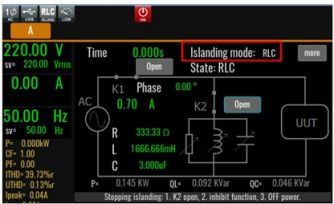
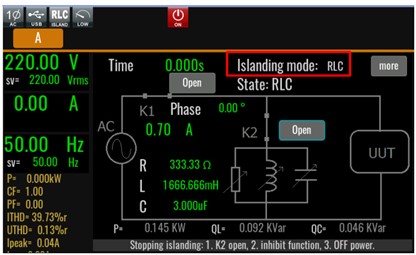
Anti-islanding protection testing:
Combined with RLC loads, it simulates balanced local generation and load
conditions to verify whether the system can detect grid loss and disconnect
quickly. The IT7900P/EP can rapidly shut down output (<10 ms), emulating
grid-side switching events.
Grid Adaptability Testing
Comprehensively simulates harsh and complex grid conditions such as voltage imbalance, background harmonics, and frequency fluctuations, providing a full evaluation of grid-connected adaptability and operational stability of equipment.
Electric Vehicle Charging Equipment Testing
Targeting onboard chargers (OBCs) and charging stations.
Full
operating condition input simulation:
Covers global standard voltages (e.g., 120 V / 230 V / 400 V) and frequencies
(50/60 Hz), as well as abnormal operating ranges.
Charging
sequence testing:
Simulates the impact of grid fluctuations on charging start/stop behavior and
power adjustment processes, verifying the robustness of communication and
control logic.
Efficiency
and harmonic testing:
Across the entire charging power range, evaluates efficiency curves and input
current harmonics under different grid voltages to ensure compliance with
relevant standards.
Aerospace Power Supply Testing
AC
power characteristic testing:
Simulates aircraft power systems including constant frequency (400 Hz),
variable frequency (360–800 Hz), and DC supply systems (28 V / 270 V).
Voltage
spike and surge testing:
Injects high-energy pulses defined by standards to evaluate equipment withstand
capability.
Power
fault simulation:
Simulates abnormal conditions such as phase loss, imbalance, and modulated
voltage faults.
Component and Material Testing
Circuit
breaker and contactor testing:
Simulates fault currents to evaluate breaking performance and lifecycle
durability.
Transformer
and reactor testing:
Tests losses, temperature rise, and acoustic noise under varying voltage,
frequency (including harmonic distortion) conditions.
4. System Integration Applications
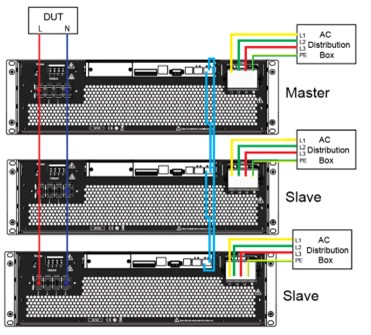
Multi-Unit Parallel Operation and Three-Phase Expansion
Through master-slave parallel configuration, high-power three-phase or multi-phase output can be achieved, meeting the testing requirements of megawatt-level equipment such as large-scale energy storage systems and direct-drive wind turbine converters.
The precise synchronization control of the IT7900P ensures consistency in amplitude and phase among all units.
Automated Test System Integration
Based on the standard SCPI command set and IVI drivers, the IT7900P/EP can be easily integrated into automated test platforms controlled by test management software (such as TestStand and LabVIEW). This enables full-process automation, including parameter configuration, test execution, data acquisition, and report generation, greatly improving efficiency in both R&D and production testing.
Grid simulators have evolved from simple AC power sources into highly intelligent and programmable platforms capable of reproducing complex grid conditions. The ITECH IT7900P/EP series, with its high performance, flexibility, and rich functionality, provides a powerful tool for the development, certification, and quality control of power electronic equipment across various industries.
As the share of renewable energy continues to grow and the complexity of power electronic systems increases, the importance of grid simulators in testing will become even more prominent. In the future, grid simulators will further integrate with digital twin and artificial intelligence technologies to enable more intelligent test scenario generation and result analysis. They will continue to evolve toward higher power density, wider bandwidth, greater accuracy, and tighter system integration—helping ensure safer, more stable, and more efficient power systems.