How to Test Battery Efficiency
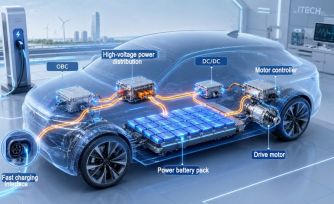
In applications such as renewable energy, energy storage systems, electric vehicles, and consumer electronics, battery efficiency is one of the key indicators used to evaluate battery performance.
It not only directly affects system energy utilization, driving range, and operating costs, but is also closely related to:
• Control
strategies of the Battery Management System (BMS)
• Selection of chargers, dischargers, and power supply systems
• Overall system energy efficiency evaluation and regulatory compliance
• Battery lifetime and thermal management design
Therefore, establishing an accurate, repeatable, and engineering-oriented battery efficiency testing method is an essential part of the R&D and testing phases.
Definition of Battery Efficiency and Test Object
In practical testing, the most commonly used metric is energy efficiency:
η=Edischarge/Echarge×100%
Where:
- E_charge: Total energy absorbed by the battery during the charging process
- E_discharge: Total energy released by the battery during the discharging process
Key Point:
Battery efficiency is not an instantaneous value, but rather the integrated
energy result over a complete charge–discharge cycle.
Limitations of Traditional Testing Methods
Traditional battery efficiency testing typically uses the following setup:
- A DC power supply for charging
- An electronic load for discharging
- Data collected separately and then calculated afterward
However, in practical applications, this approach presents several notable challenges:
- Charging and discharging use different instruments, leading to inconsistent measurement references
- Switching between devices introduces timing and sampling errors
- Discharged energy is converted directly into heat, resulting in high energy consumption
- High-precision power integration is difficult to achieve
For these reasons, an increasing number of testing systems are adopting a bidirectional DC power supply combined with an energy-regenerative architecture.
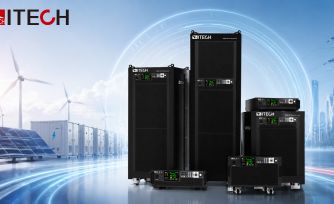
Battery Efficiency Testing System Architecture Based on ITECH Bidirectional DC Power Supplies
1. System Configuration (Conceptual Description)
A typical testing system architecture is as follows:
AC Grid
↑↓ (Energy Regeneration)
ITECH Bidirectional DC Power Supply (Source / Sink)
↑↓ (DC)
Battery / Battery Module / Battery Pack
Within this architecture:
- A single device performs both charging and discharging
- Voltage, current, and power measurements share the same measurement path
- Discharge energy can be fed back to the AC grid
2. Example ITECH Product Models
Depending on the power level, the following options are available:
- IT6000B / IT6000C Series
- High-precision bidirectional DC power supplies
- Suitable for cell and module efficiency testing
- Supports CC / CV / CP mode switching
- IT8000 Series High-Power Bidirectional DC Power Supplies
- Designed for pack-level and energy storage applications
- Supports parallel expansion, with power up to the MW level
- Suitable for system-level efficiency evaluation
Battery Efficiency Testing Procedure and Curve Analysis
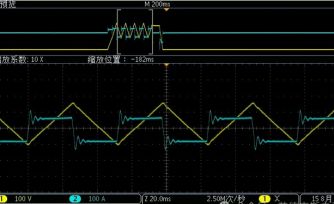
1. Charging Phase Test Curve Explanation
Test Method: CC-CV Charging
Typical Charging Curve Description:
- The initial stage is constant current (CC) charging
- Current remains constant
- Voltage gradually rises
- Upon reaching the cutoff voltage, it enters the constant voltage (CV) stage
- Voltage remains constant
- Current gradually decreases
Power Curve Characteristics:
- During the CC stage, power increases as voltage rises
- During the CV stage, power gradually decreases as current drops
During this phase, the ITECH bidirectional DC power supply performs in real time:
- Synchronous voltage and current sampling
- Power integration to calculate Echarge
2. Discharging Phase Test Curve Explanation
Test Method: Constant Current (CC) or Constant Power (CP) Discharge
Typical Discharge Curve Description:
- Current flows in the opposite direction
- Battery voltage gradually decreases as SOC drops
- Discharge power varies with voltage
Discharge Energy Curve:
- Power is negative (indicating energy is fed back)
- Integration givesEdischarge
During the discharge process:
- Energy is fed back to the AC grid via IT6000 / IT8000
- The testing system itself consumes almost no additional energy
3. Energy Efficiency Calculation Example
- Charging Energy: 1000 Wh
- Discharging Energy: 940 Wh
- Battery Efficiency: 94%
This efficiency value can be compared and analyzed under:
- Different C-rates
- Different temperatures
- Different aging stages
Key Technologies for Improving Testing Accuracy (ITECH Advantages)
1. Single-Device Bidirectional Measurement to Avoid System Errors
- Charging and discharging are performed by the same device
- No device switching required
- High consistency in voltage and current measurements
2. High-Precision Power and Energy Integration
- High-resolution voltage and current sampling
- Supports long-term stable operation
- Ideal for comparative tests with small efficiency differences
3. Automated Testing and Data Output
- Supports SCPI / host software control
- Automatically performs multi-cycle efficiency tests
- Can output efficiency values, curves, and statistical data
Typical Application Scenarios
- Cell efficiency comparison testing
- Module / Pack energy efficiency evaluation
- Energy storage system circuit efficiency analysis
- Battery aging and efficiency degradation studies
- BMS algorithm verification and parameter calibration
Conclusion
The essence of battery efficiency testing is the precise quantification of the entire energy flow process.
Compared with traditional methods, a regenerative testing system based on ITECH bidirectional DC power supplies offers clear advantages in accuracy, energy consumption, and engineering consistency.
For those aiming to build a battery testing platform that is:
- High-precision
- Highly automated
- Scalable
- Low in operational cost
the bidirectional DC power supply has become the industry’s mainstream choice.